
A smile makeover in Austin combines cosmetic dental treatments to create a smile that looks natural and fits your facial features.
Whether you want to improve chipped, stained, uneven, crowded, or worn teeth, your treatment is customized around what you want to change.
At Austin Cosmetic & Implant Dentistry, Dr. Madeleine Chung leads smile makeover and cosmetic dentistry treatments, beginning with your goals and showing you a proposed smile before permanent treatment begins.
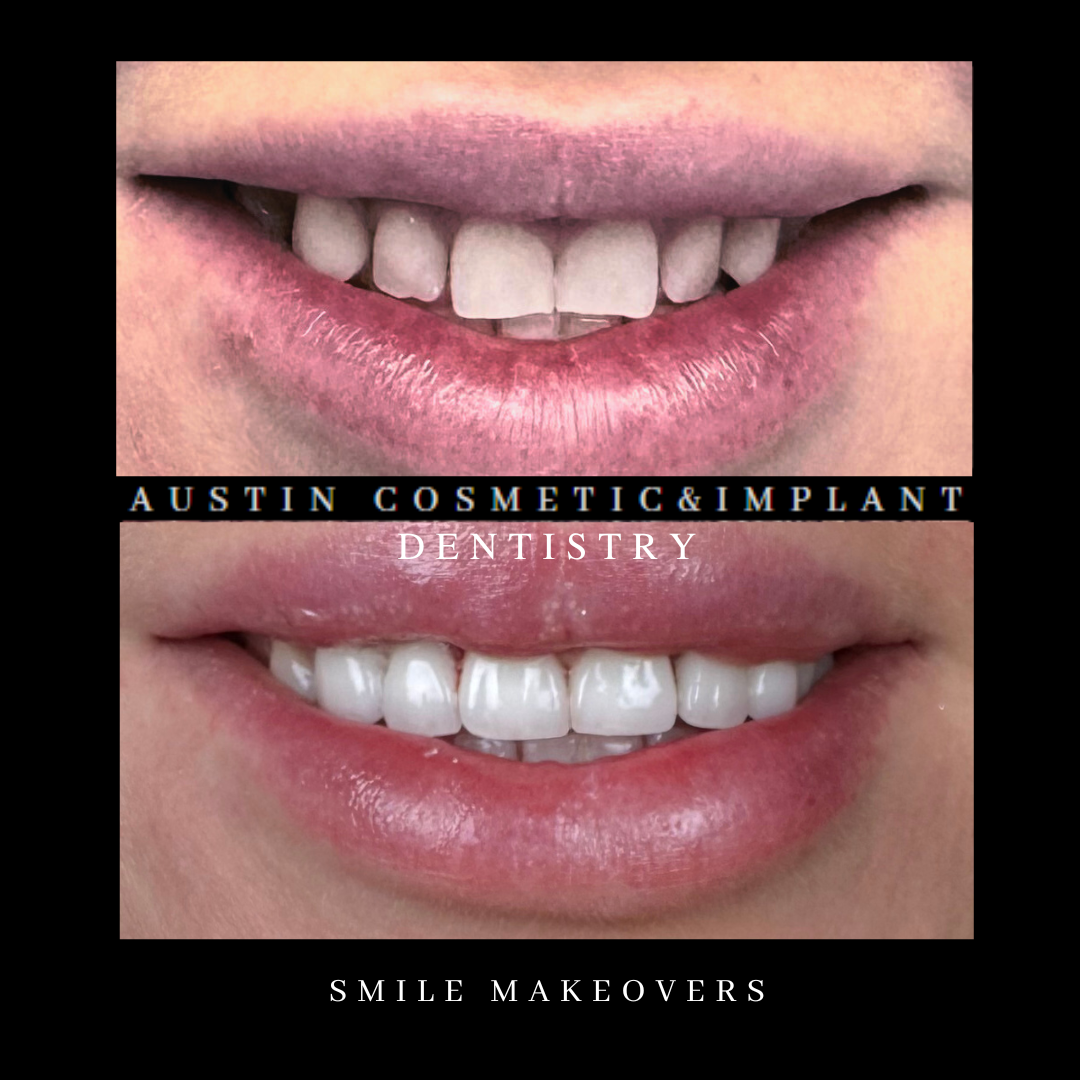
A smile makeover is a personalized combination of cosmetic treatments rather than a single procedure. Depending on your needs, treatment may include:
Some patients need several treatments, while others may achieve their goals with just whitening and bonding. Scope is a decision you make after seeing the design, not a package chosen up front.
Smile design is a discipline rather than a procedure. These are the elements measured in your photographs, and knowing them helps you say what you want.
Most patients arrive describing a concern rather than a treatment, which is the more useful starting point.
| What is bothering you | Usual solution | Why |
|---|---|---|
| A chipped front tooth | Cosmetic bonding | Rebuilds the edge in one visit |
| Stains that will not whiten | Porcelain veneers | Porcelain covers internal discoloration |
| Uneven tooth lengths | Veneers, sometimes contouring | Restores proportion and the edge curve |
| Small gaps between teeth | Bonding, veneers, or aligners | Small gaps fill well, wider ones need moving |
| A gummy smile | Gum contouring | Raises and evens the gum line |
| Crooked teeth | Aligners, then veneers | Aligning first preserves enamel |
| Worn down teeth | Veneers or crowns | Restores lost length |
You may be a candidate if your teeth and gums are healthy, your bite is comfortable, and your primary concern is appearance.
If you have active decay, gum inflammation, severe tooth wear, or significant bite problems, those issues should be addressed first. Widespread wear or failing teeth is a restorative question, not a cosmetic one.
Heavy grinding does not rule out cosmetic treatment, but it does mean a night guard is planned from the start rather than added later.
In some cases, clear aligners can straighten crowded teeth before veneers, allowing for a more conservative cosmetic result.
Porcelain can disguise a tooth that is crowded or tipped, but fitting a new shape into an old position means removing more enamel. Moving the tooth first lets the veneer be thinner.
Alignment adds months, and not everyone wants to wait. A cosmetic dentist should raise the option and let you decide.
This is the part that settles most nerves. Nothing permanent happens until you have seen the proposed smile and worn it.
Clinical and facial photographs, digital scans, and a check of the teeth involved.
Your proposed teeth are drawn over a photograph of your own face, so you can judge proportion and edge position against your features.
The approved design is sculpted in wax on a model of your teeth, turning a flat image into shapes that can be tested.
Those shapes are transferred onto your teeth in temporary material, so you can wear the proposed smile, eat and talk in it, and photograph it.
Wear it for a day or a weekend if you can. Patients come back with specific notes, such as the edges feel long or the front teeth look square, and those notes shape the final design. Our smile gallery shows finished results.
The brightest shade available is rarely the right one. A shade that suits your skin tone and your age tends to look like good luck, while one two steps past it announces itself.
Shade tabs are compared in daylight, against your face, rather than chosen from a catalog. The natural teeth beside the restorations set the reference, which is why whitening comes first.
Expectations matter as much as materials. A makeover can change color, shape, length, and symmetry. It does not change your lip line, and a design that ignores your face tends to look applied rather than natural.
Cosmetic work is durable, but it is not indestructible.
Brush and floss normally, including the gum line where veneer margins sit, and tell your hygienist you have porcelain so a non-abrasive polish is used.
If you grind or clench, wear the night guard. It is generally the biggest factor in how long porcelain survives, and persistent grinding may be worth evaluating alongside jaw joint symptoms.
Shade needs upkeep too. Porcelain does not stain the way enamel does, but the natural teeth around it can, so touch-up whitening keeps things matched.
Dr. Madeleine Chung plans cosmetic treatment around your face, smile, and individual goals. She may recommend a smaller treatment plan when it can achieve the result you want.
Having an oral and maxillofacial surgeon in the same practice also helps, because a cosmetic plan that turns out to need an extraction or implant stays in one building.
Our Southwest Austin office on Highway 290 serves patients from Oak Hill, Circle C, Sunset Valley, Dripping Springs, and Belterra. You can request a cosmetic consultation and bring photographs of smiles you like.
How long does a smile makeover take?
It depends on the treatments involved. Whitening and bonding may take one or two visits, while veneer cases typically take several weeks from records to delivery. Aligners add additional treatment time, usually several months, before any cosmetic work begins.
Will my teeth need to be filed for veneers?
Some preparation is usually required, but the amount depends on tooth position and the planned restoration. Bonding and whitening generally require little or no enamel removal. Straightening crowded teeth first typically reduces how much enamel a veneer needs.
Will my veneers look natural?
Natural-looking veneers are designed around your tooth proportions, facial features, shade, and desired appearance. The goal is a balanced smile rather than identical, overly uniform teeth. Restorations tend to look artificial when they are too white, too flat, and all the same shape.
What if I do not like the trial smile?
That is what it is for. The trial smile is temporary material placed over your teeth so you can wear the proposed design rather than only look at it. If the teeth feel long, square, or too bright, the design is changed before anything permanent is made.
Should I whiten before veneers?
Yes. Natural teeth should generally be whitened before matching the shade of porcelain restorations. Porcelain does not lighten later, so whitening afterward only changes the teeth around the restorations and can create a mismatch.
Can crooked teeth be treated with a smile makeover?
Often. Clear aligners may be recommended first to move teeth into a better position and reduce the amount of enamel preparation needed for veneers. Bonding and veneers can mask mild crowding when you prefer not to wait.
Does insurance cover a smile makeover?
Elective cosmetic treatment is generally not covered, although coverage can differ for restorative procedures such as crowns or replacement fillings. Coverage depends on your individual plan, and a consultation produces an individualized written treatment plan.
How long do cosmetic results last?
Longevity depends on the treatment and your oral care. Good hygiene, regular dental visits, and a night guard when needed can help protect cosmetic restorations. Bonding generally has a shorter service life than porcelain because it stains and chips more easily.
A consultation with Dr. Madeleine Chung starts with what you want changed rather than a treatment list. You will see a design over your own photograph before anything is permanent.
Austin Cosmetic & Implant Dentistry
13341 US Highway 290, Unit 1-107, Austin, TX 78737
Monday to Friday 8:30 AM to 4:30 PM, Saturday by appointment