
If you are looking for veneers in Austin, porcelain veneers can improve the appearance of chipped, discolored, worn, uneven, or slightly rotated front teeth.
These thin, custom-made ceramic shells are bonded to the front of your teeth to create a natural-looking, balanced smile.
At Austin Cosmetic & Implant Dentistry, Dr. Madeleine Chung evaluates your teeth, gums, bite, and smile goals before recommending veneers. The goal is not simply to place porcelain. It is to determine whether veneers are the right treatment for your teeth and how to achieve a result that looks natural.
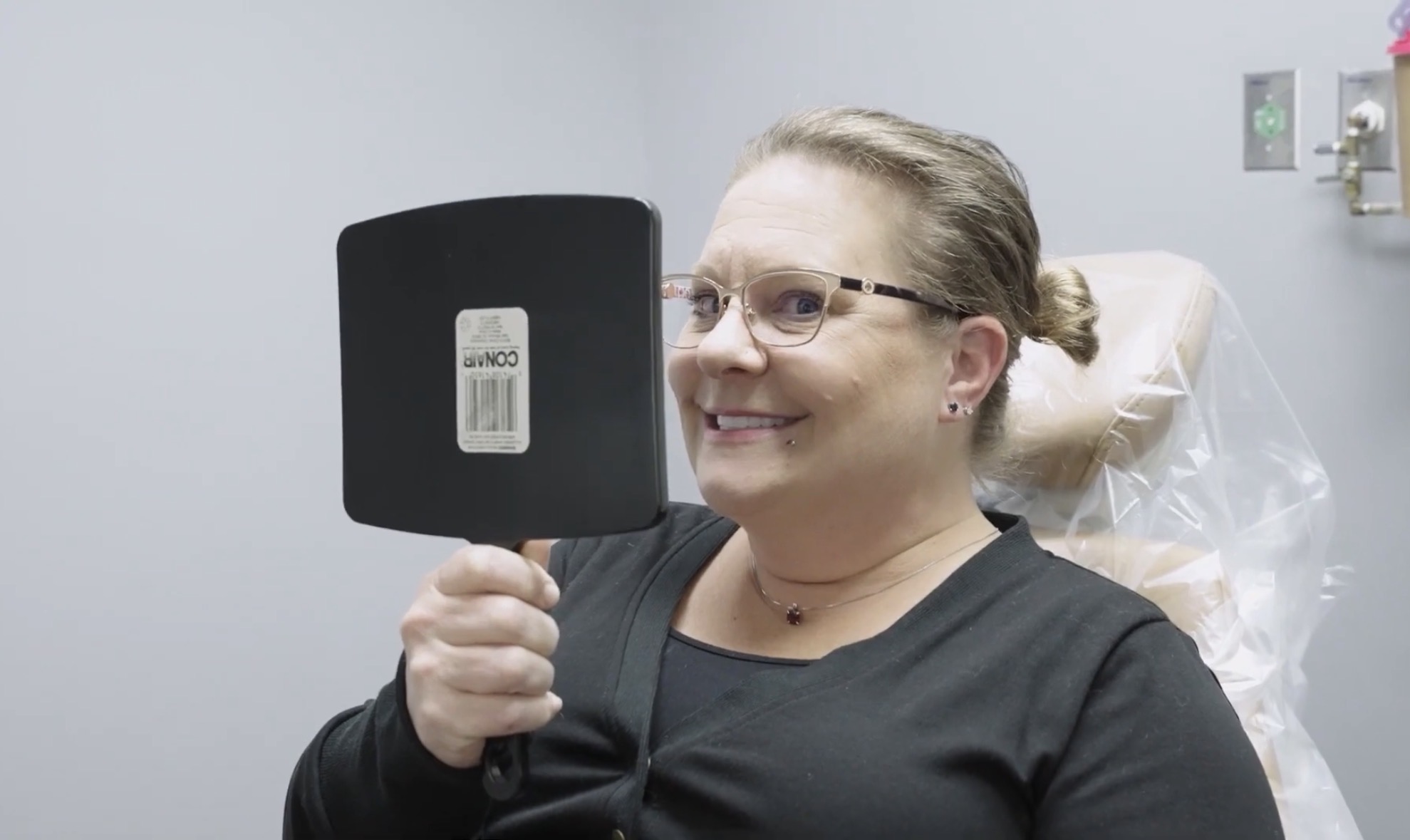
Porcelain veneers are thin shells of dental ceramic made specifically for your teeth. Unlike a dental crown, which covers the entire tooth, a veneer primarily covers the visible front surface and biting edge.
Porcelain is popular because it closely mimics the translucency of natural enamel and is highly resistant to staining. With proper care, porcelain veneers commonly last well beyond a decade.
That difference matters. A dental crown reduces the tooth on every side, while a veneer leaves the back of the tooth untouched.
Veneers are one option within cosmetic dentistry, alongside whitening, bonding, and orthodontics. They are not a treatment for disease, and a veneer bonded over untreated decay will not last.
Dental veneers in Austin, TX may be appropriate for:
Veneers are not a solution for every smile concern. This part is worth reading twice.
If a veneer consultation never mentions your gums, your bite, or your grinding habits, treat that as a warning sign.
One of the most important questions to ask about veneers is how much natural tooth structure must be removed. Veneers fall into three categories.
Because enamel does not grow back, veneer treatment should be considered a long-term commitment. A prepared tooth will require a restoration in the future if the veneer needs replacement.
That is not a reason to avoid veneers. It is a reason to be certain before anything touches enamel.
Getting porcelain veneers in Austin typically involves several appointments. You approve how they look before anything becomes permanent.
Dr. Chung evaluates your teeth, gums, bite, photographs, and digital scans. Many patients review our smile gallery beforehand.
A thin layer of enamel is removed when necessary, and impressions or a digital scan are taken. Shade is recorded while the teeth are still hydrated, since teeth lighten as they dry.
Temporaries allow you to evaluate the proposed shape and length. If a tooth feels too long, say so now, because those notes go to the laboratory.
The final veneers are placed without permanent cement so their shade, shape, and fit can be reviewed. Nothing is permanent until you approve it.
Once approved, the veneers are bonded to your teeth and your bite is carefully checked.
If your goals cover the whole smile rather than a few teeth, a smile makeover may be the better starting point.
Porcelain and composite bonding both improve the appearance of teeth, but they serve different needs. For a single small chip, cosmetic bonding may be the simpler choice. For several front teeth, porcelain may provide a more consistent result. Crowns suit teeth that are cracked or heavily filled.
| Porcelain Veneers | Cosmetic Bonding | Dental Crowns | |
|---|---|---|---|
| Material | Layered porcelain, laboratory made | Composite resin, shaped chairside | Porcelain or zirconia |
| Tooth structure removed | Thin layer from the front | Often little or none | Reduction on all surfaces |
| Appointments needed | Three or more | Usually one | One or two |
| Stain resistance | Very high | Moderate, stains gradually | Very high |
| Typical lifespan | Commonly well beyond 10 years | Shorter, needs polishing | Comparable to veneers or longer |
| Reversibility | Not reversible after preparation | Generally reversible | Not reversible |
| Best suited for | Several front teeth at once | Chips and small gaps | Cracked or heavily filled teeth |
With good oral hygiene and appropriate care, porcelain veneers commonly last well beyond 10 years. Grinding, clenching, chewing ice, biting hard objects, and an unbalanced bite can shorten their lifespan. Veneers rarely break while chewing food. They break under force on a thin edge.
A custom night guard may be recommended for patients who grind or clench. Use a soft toothbrush, floss daily, and choose non-abrasive toothpaste, because whitening and charcoal formulas can dull polished porcelain.
Porcelain itself is highly stain resistant, but the natural teeth next to veneers can still change color. Whitening gel has no effect on porcelain, which is why whitening comes first.
Years later the porcelain is often still sound while the gum line has moved. As gums recede the margin can show as a thin line, the usual reason a veneer is replaced in a healthy mouth.
The best veneer candidates have healthy teeth and gums and realistic expectations about what cosmetic dentistry can accomplish. Your bite, gum health, tooth structure, and habits all matter.
At Austin Cosmetic & Implant Dentistry, Dr. Madeleine Chung creates personalized veneer treatment plans based on your facial features, smile, and bite rather than using a one-size-fits-all design. Sedation is available in our office.
Our Southwest Austin office on Highway 290 serves Oak Hill, Dripping Springs, Belterra, and Bee Cave. If you are considering porcelain veneers in Austin, TX, request a consultation to find out whether veneers are right for you, or whether another treatment could reach your goals more conservatively.
Are porcelain veneers permanent?
The veneers themselves are not permanent, but the decision generally is. Any veneer eventually needs replacing, and most veneers require removing a thin layer of enamel first. Because enamel does not grow back, a prepared tooth will need a veneer or a crown from then on.
Do veneers ruin your natural teeth?
No, but they do change them. A well planned veneer removes only a small amount of enamel, and the tooth underneath stays alive. What changes is that the tooth now relies on a restoration. Teeth with veneers can still develop decay and still need regular cleanings.
How long do porcelain veneers last?
With good hygiene and appropriate care, porcelain veneers commonly last well beyond 10 years. Lifespan typically depends more on habits than on the porcelain. Grinding, chewing ice and an unbalanced bite can shorten the life of any veneer.
Do porcelain veneers stain?
Glazed porcelain is highly stain resistant and generally resists coffee, tea, red wine and tobacco better than enamel or composite. The bonded margin can pick up stain over time, and the natural teeth beside the veneers can still change color while the porcelain does not.
How many veneers will I need?
It depends on how much of your smile shows when you talk and laugh. One veneer may be enough to match a single damaged tooth. Many patients treat the upper front teeth together so the result does not stop abruptly at the corners of the smile.
Does getting veneers hurt?
Preparation is done with local anesthetic, so the appointment is comfortable for most patients. Mild sensitivity to cold and pressure while you wear temporaries is common and typically settles within days of final bonding. Sedation options are available if dental anxiety is a concern.
Should I whiten my teeth before getting veneers?
Generally yes, and the order matters. Porcelain does not respond to whitening gel, so the shade of your natural teeth at the time the veneers are made sets the reference for the rest of your smile. Whiten first, let the shade settle, then match.
How much do porcelain veneers cost in Austin?
Cost depends on the number of teeth being treated and whether additional treatment such as gum care or orthodontic alignment is needed first. Because veneers are elective cosmetic treatment, dental insurance rarely covers them. A consultation produces an individualized written plan.
A veneer consultation with Dr. Madeleine Chung begins with photographs, a look at your gums and bite, and a straight answer about whether porcelain suits your teeth.
Austin Cosmetic & Implant Dentistry
13341 US Highway 290, Unit 1-107, Austin, TX 78737
Monday to Friday 8:30 AM to 4:30 PM, Saturday by appointment