Dental Bone Grafting in Austin, TX
If you have been told you do not have enough bone for a dental implant, bone grafting in Austin may help rebuild the foundation needed for successful implant placement.
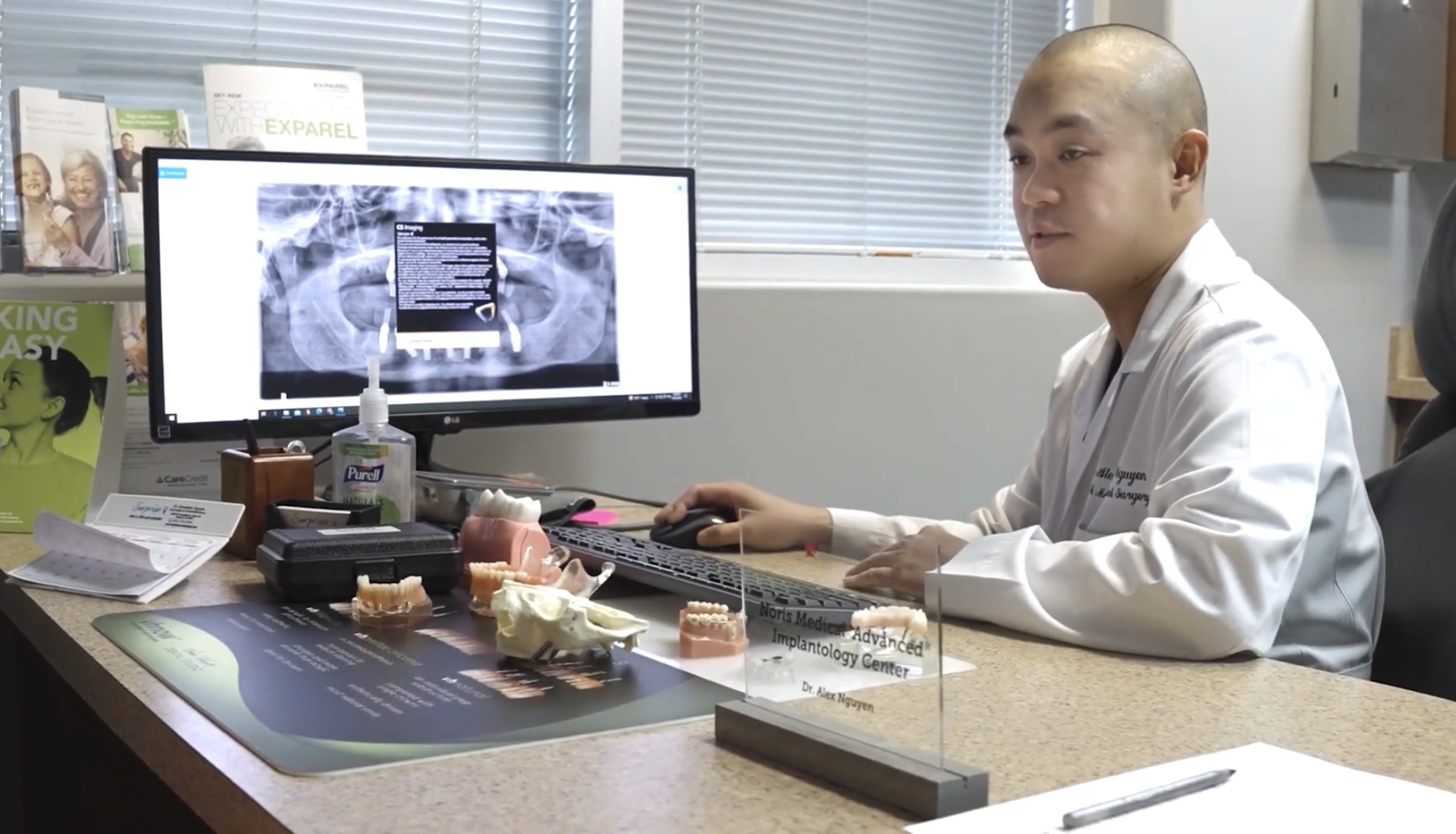
A dental bone graft adds material to an area where jawbone is too thin or has been lost. The graft provides a framework for your body to form new bone. At Austin Cosmetic & Implant Dentistry, Dr. Alexander Nguyen uses 3D CBCT imaging to evaluate your bone height, width, and anatomy before recommending grafting.
Do I Need a Dental Bone Graft?
Not every dental implant patient needs a bone graft. If you have enough healthy bone in the right position, an implant may be placed without additional grafting.
Bone grafting may be recommended when:
- The jawbone has shrunk after tooth loss
- The ridge is too narrow for an implant
- There is not enough bone height
- A tooth is being extracted and will eventually be replaced with an implant
- Bone loss has occurred from infection, gum disease, or other causes
A 3D scan helps determine whether you need grafting and which approach is appropriate.
Why Does Jawbone Shrink After Tooth Loss?
The bone surrounding a tooth root is maintained partly by the stimulation created when you chew. After a tooth is removed, that stimulation stops and the body gradually resorbs the bone.
Bone loss can be most noticeable during the first several months after extraction. Socket preservation performed when a tooth is removed can help maintain the shape of the ridge and may reduce the amount of reconstruction needed before an implant.
Types of Dental Bone Grafts
The right graft depends on how much bone has been lost and where reconstruction is needed.
Socket preservation: Graft material is placed in the extraction socket to help maintain the ridge.
Ridge augmentation: Bone graft material is added to a narrowed ridge to increase its width and, in some cases, its height.
Guided bone regeneration: A protective membrane may be used over the graft to help new bone form in the intended area.
Block grafting: A solid piece of bone may be secured to the jaw when a larger or more complex defect needs reconstruction.
Your treatment plan depends on your anatomy, the condition of the site, and the type of implant restoration being planned.
Where Does Dental Bone Graft Material Come From?
Dental bone graft material can come from several sources:
- Autograft: Your own bone taken from another area
- Allograft: Processed human donor bone obtained through a tissue bank
- Xenograft: Processed animal-derived bone mineral
- Synthetic graft: Laboratory-made bone substitute materials
Processed donor and animal-derived graft materials do not contain living tissue in the way an organ transplant does. Your surgeon can explain the material recommended for your case and discuss alternatives if you have a preference.
What Happens During Bone Grafting?
Your treatment begins with an examination and 3D CBCT scan. The scan shows the available bone and the location of important structures such as nerves and the sinus.
During the procedure, the area is numbed with local anesthetic. The graft material is placed where additional bone is needed, and a membrane may be used when appropriate. The gum is then closed over the site.
Many straightforward grafting procedures can be completed in under an hour, although larger or more complex procedures may take longer. IV sedation may also be available for appropriate patients.
How Long Does a Bone Graft Take to Heal?
Healing time varies according to the type and size of the graft and your individual healing response.
As a general guide:
- Socket preservation: about 3–4 months
- Guided bone regeneration: about 4–6 months
- Ridge augmentation: about 4–8 months
- Larger block grafts: about 5–9 months
A follow-up examination and, when appropriate, another 3D scan can help determine when the site is ready for implant placement.
In some cases, an implant can be placed at the same appointment as grafting. This depends on whether the existing bone can provide sufficient initial stability. When more extensive reconstruction is required, grafting is usually completed first and the implant is placed after healing.
Bone Grafting After a Tooth Extraction
If you know you may eventually want a dental implant, ask about socket preservation at the time of extraction. Maintaining the shape of the extraction site can be preferable to waiting until substantial ridge resorption has occurred.
However, grafting is not automatically necessary after every extraction. Your dentist or oral surgeon can determine whether preservation makes sense based on your future treatment plans and the condition of the socket.
Recovery After Bone Grafting
Mild soreness, pressure, swelling, and bruising can occur after grafting. Swelling often reaches its maximum around the second or third day before gradually improving.
For the first few days, follow your surgical instructions, eat softer foods, and avoid strenuous activity. Avoid smoking, vaping, straws, and forceful spitting because they can interfere with healing.
Contact the office if you develop increasing swelling after the first few days, fever, significant bleeding, worsening pain, or drainage from the surgical site.
Bone Grafting and Dental Implants in Austin
Bone grafting is not usually the final goal. It is performed to create a stronger foundation for the implant and restoration that follows.
At Austin Cosmetic & Implant Dentistry, Dr. Alexander Nguyen performs oral surgery and implant procedures, while Dr. Madeleine Chung plans the final restoration. Coordinating the surgical and restorative portions of treatment helps ensure that the graft is placed with the planned implant and crown in mind.
The Highway 290 office serves patients from Oak Hill, Circle C, Dripping Springs, Belterra, Bee Cave, Wimberley, and surrounding Austin communities.
Frequently Asked Questions
Does a dental bone graft hurt?
The procedure is performed with local anesthetic, so you should not feel sharp pain during treatment. Soreness and pressure are common afterward. IV sedation may also be available.
Can I get an implant without a bone graft?
Yes. If your 3D scan shows sufficient bone height and width, an implant may not require grafting.
How long after a bone graft can I get an implant?
It depends on the graft and how well the site heals. Many grafted sites require several months before implant placement.
Can a bone graft and implant be done at the same time?
Sometimes. If sufficient existing bone can stabilize the implant, grafting and implant placement may be performed together. Larger defects generally require staged treatment.
Is donor bone safe?
Processed allograft material comes from screened donors and regulated tissue-bank systems. Processing removes cellular components and reduces the risk of disease transmission, which is considered very rare.
Does graft material stay in my jaw?
Graft materials behave differently. Many serve as a framework that is gradually remodeled as your body forms new bone. Some materials resorb slowly and may leave mineral behind.
How much does bone grafting cost in Austin?
The cost depends on the size and location of the defect, graft material, membrane use, sedation, and other treatment needs. An examination and 3D scan are needed for an individualized estimate.
What if I have severe bone loss?
Several treatment options may be available depending on where the bone has been lost. These can include ridge augmentation, sinus lift procedures, or specialized implant approaches such as zygomatic implants.
Find Out If You Need Bone Grafting
A 3D scan can show exactly how much bone you have and whether grafting is necessary for your dental implant treatment.